

OOU Postgraduate Student Wins Grace Alele-Williams Masters Award at Deep Learning Indaba 2026
The Grace Alele-Williams Masters Award at the Deep Learning INDABA (DLI) 2026 was won by Akinbobola Adegboyega, an MSc student in the Department of Computer Science, Olabisi Onabanjo University (OOU), supervised by Dr. Sakinat Folorunso. The runner-up in the category was Imen Habibi of LARIA, ENSI, University of Manouba, Tunisia.
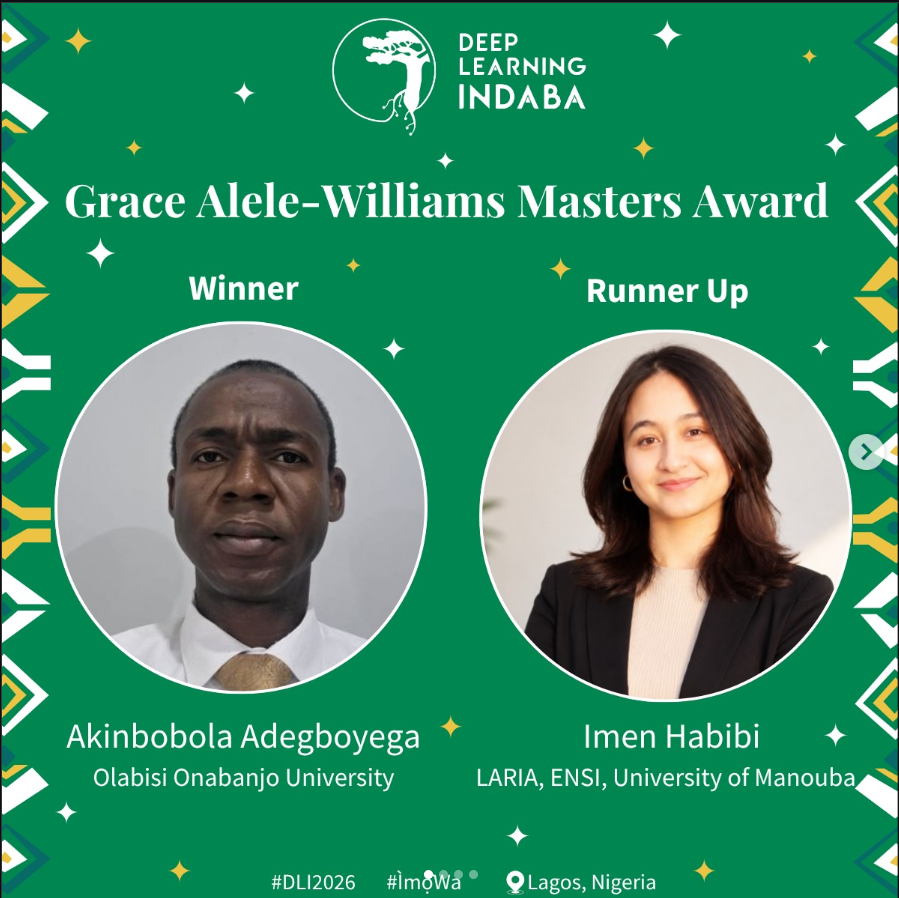
The award was presented at the Deep Learning Indaba Awards 2026, held in Lagos, Nigeria, which drew over 50 nominations recognising outstanding African-led work in AI research, innovation, and community impact, spanning African language technology, biomedical AI, and the theory of how machines and minds learn. Akinbobola’s win places OOU and Nigeria among a distinguished continental cohort of honourees this year, alongside winners from Ethiopia, Chad, Kenya, South Africa, and Egypt.
Akinbobola’s award-winning research addressed one of the most pressing gaps in African-language natural language processing: the near-total absence of low-resource African languages, such as Yorùbá, from the datasets that train today’s leading large language models (LLMs). His work focused specifically on how well machine translation systems preserve emotion, not just vocabulary, when translating between English and Yorùbá — a language whose meaning is carried as much by tone, idiom, and cultural nuance as by words themselves.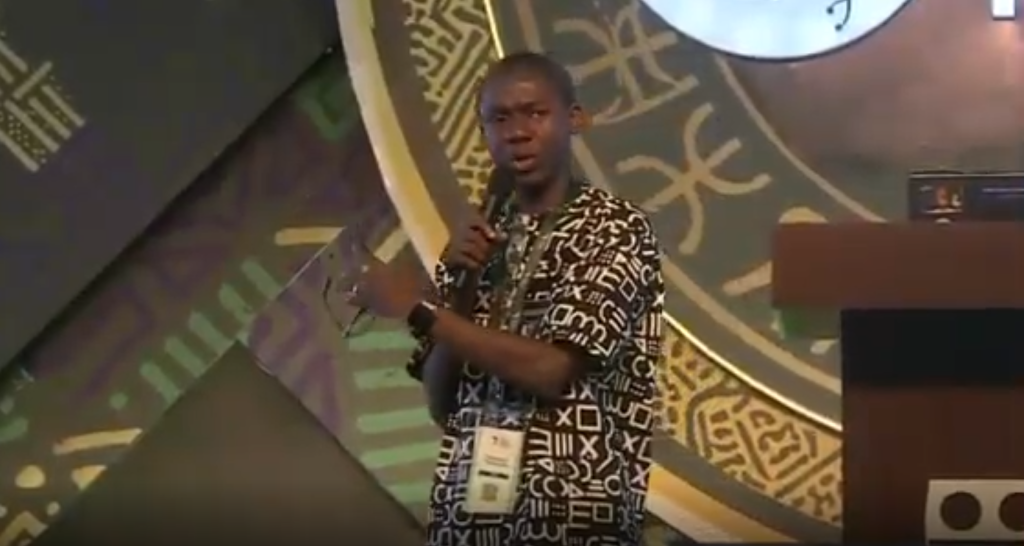
To investigate this, Akinbobola built a first-of-its-kind emotion-annotated benchmark dataset for English-to-Yorùbá translation, grounded in the Cowen and Keltner (2017) framework of emotional categories. Over a thousand paragraphs, spanning 27 distinct emotion categories and more than 200 fine-grained emotional labels, were curated, translated, and independently verified before being used to evaluate four leading LLMs — OpenAI’s ChatGPT, Google’s Gemini, and DeepSeek, among others — on their ability to preserve emotional meaning in translation.
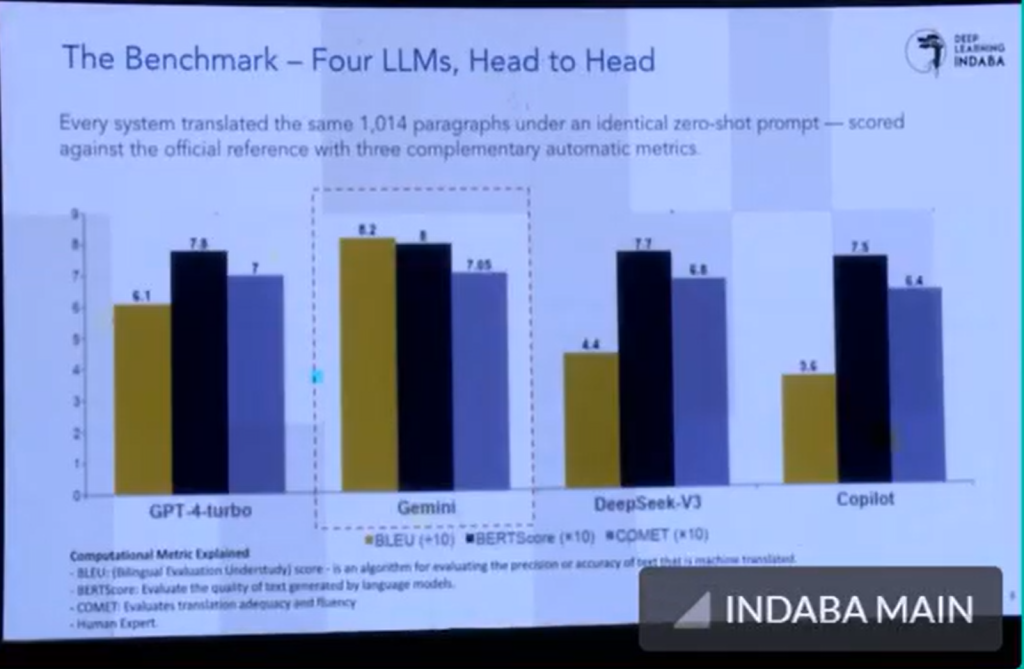
The findings showed that while one system produced the most faithful Yorùbá translations overall, even the best-performing model still fell short of fully capturing the emotional and cultural nuance embedded in the Yorùbá language, including its tonal marks and idiomatic expressions. Human linguistic evaluators worked alongside automated scoring methods to validate how closely each model’s output matched genuine human interpretation.
Beyond the technical findings, the project’s most significant contribution is its open, reusable dataset and benchmarking framework, now publicly available, which is designed to guide future research into emotion-sensitive machine translation for Yorùbá and other under-represented African languages.
The Department of Computer Science congratulates Akinbobola Adegboyega on this well-deserved continental recognition and commends Dr. Sakinat Folorunso for her continued mentorship in advancing indigenous-language AI research at OOU.
A recording of the award presentation is available for viewing here.
(3) Comments