
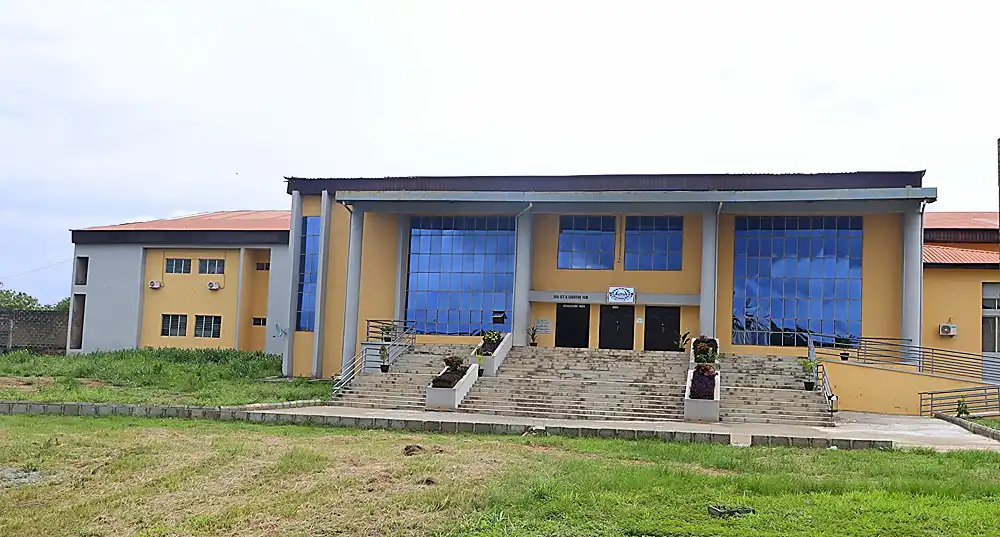
The Directorate of Information and Communication Technology (DICT) serves as the central hub for innovation, digital transformation, and technological advancement within the institution. In line with global best practices, the Directorate drives the integration and responsible use of Information and Communication Technology (ICT) to enhance academic excellence, administrative efficiency, research innovation, and community service. DICT provides a robust infrastructure for teaching, learning, research, and administrative processes, ensuring that the University remains globally competitive in the digital age.
Our History
The evolution of the DICT reflects the institution’s progressive commitment to technological advancement and digital inclusiveness. The Directorate was established to coordinate, develop, and manage ICT resources and services across all campuses.
Since its inception, the DICT has spearheaded key initiatives, including automation of administrative processes, deployment of network infrastructure, establishment of e-learning platforms, digitisation of records, and enhancement of internet connectivity. Continuous policy development, infrastructural upgrades, and capacity building remain at the core of the Directorate’s mandate.
Our Vision
“To maximize the integration and utilization of Information and Communication Technology as a driving force for achieving academic excellence that ensures flowering of human abilities, service to the nation, and the world at large.”
Our Mission
“To provide the best educational experience for our students and the public, by strategically leveraging the benefits of innovations in Information and Communication Technology to empower students, faculty, and researchers with cutting-edge tools and resources, thereby promoting excellence in teaching, research, creative activities and service to the State, society and the world at large.”
DICT Structure

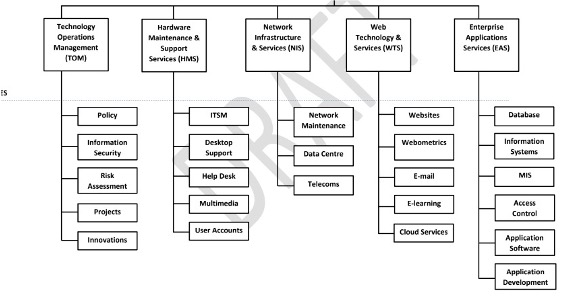
The Directorate, headed by the Director, operates through five major divisions designed for efficiency, specialisation, and service delivery.
1. Technology Operations & Management (TOM)
Responsible for the governance, policy formulation, strategic planning, and coordination of all ICT activities within the University. Sub-units include:
- Policy and Compliance
- Information Security
- Risk Assessment
- Projects and Innovations
2. Hardware Maintenance & Support Services (HMS)
Handles the repair, maintenance, and technical support of all ICT equipment and end-user devices. Sub-units include:
- Desktop Support
- Help Desk Operations
- Multimedia Services
- User Accounts Management
3. Network Infrastructure & Services (NIS)
Manages all networking and connectivity infrastructure across campuses. Sub-units include:
- Network Maintenance
- Data Centre Operations
- Telecommunication Systems
4. Web Technology & Services (WTS)
Focuses on the management of web presence, online platforms, and digital communication systems. Sub-units include:
- Websites Management
- Webometrics and Digital Visibility
- Email Administration
- E-Learning Services
- Cloud Services
5. Enterprise Applications Services (EAS)
Oversees university-wide enterprise software, application systems, and data access management. Sub-units include:
- Management Information Systems (MIS)
- Access Control Systems
- Application Development and Support
This structure ensures that all aspects of the University’s ICT operations, from infrastructure and policy to innovation and digital services, are efficiently coordinated to support OOU’s vision of excellence through technology.
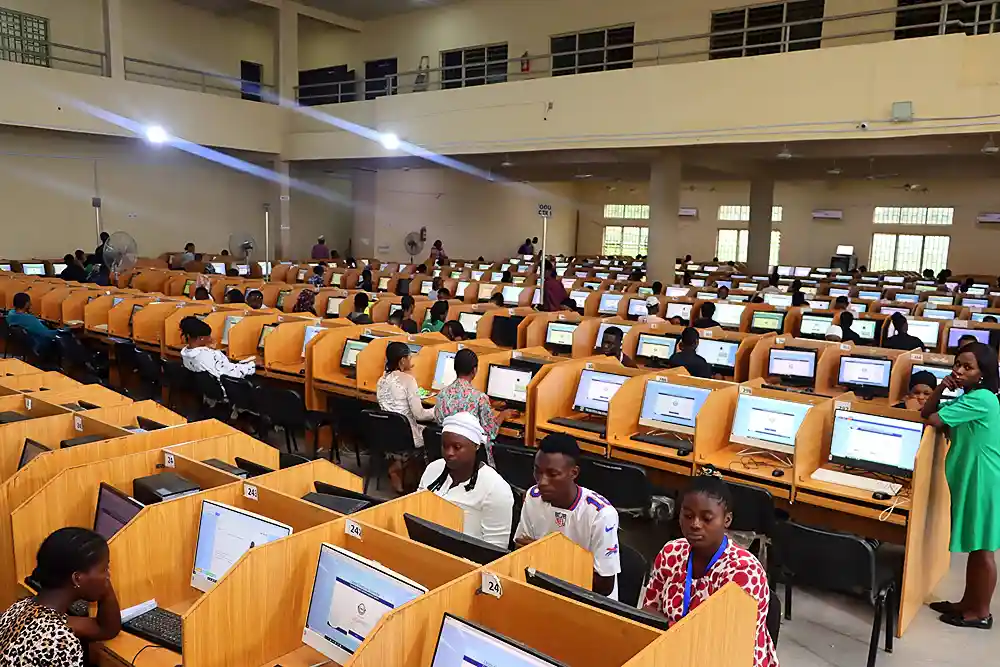
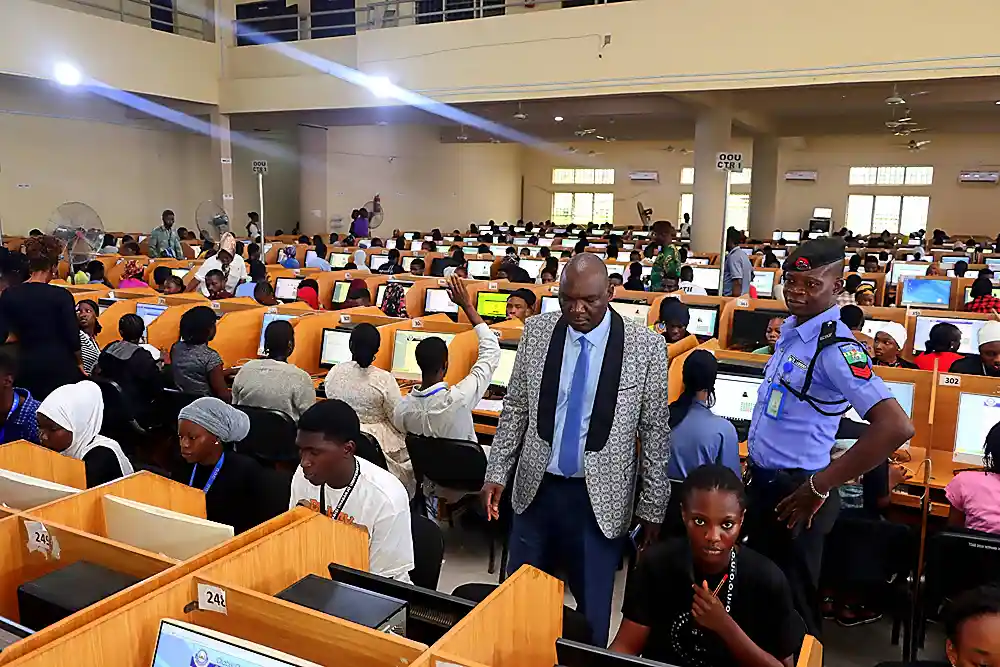
Our Goals
- Enhance learning and student engagement.
- Foster innovative teaching methods.
- Elevate research capabilities.
- Strengthen institutional online presence.
- Enhance collaboration and communication.
- Promote effective learning using technology.
- Ensure data security and privacy.
- Evaluate and measure the impact of ICT adoption.
- Cultivate a culture of innovation.
- Ensure sustainability and scalability of ICT initiatives.
Desired Outcomes
- Enhanced student learning experiences through interactive and personalised content.
- Faculty empowered with ICT-based teaching tools and methodologies.
- Increased research productivity and collaboration via digital platforms.
- Improved institutional visibility and online reputation.
- Seamless communication and collaboration across departments.
- Lifelong learning opportunities for all members of the university community.
- Strong data security and privacy standards.
- Measurable improvement in academic and administrative performance.
- A sustainable, innovative, and technology-driven university ecosystem.
Our Responsibilities
- Developing, managing, and maintaining all University ICT infrastructure and services.
- Ensuring effective automation of academic, administrative, and research activities.
- Managing network systems, email services, websites, and data centres.
- Enforcing ICT policies and compliance with ethical standards.
- Facilitating staff and student training on ICT use and cybersecurity awareness.
- Providing technical support and maintenance of computer systems across faculties, directorates, and units.
- Promoting digital literacy, innovation, and research-driven technology adoption.
- Collaborating with stakeholders to ensure efficient ICT governance and service delivery.
Directorate Organogram
Contact Information
- Address: Directorate of Information and Communication Technology (ICT), Main Campus.
- Email: enquiry@oouagoiwoye.edu.ng
- Office Hours: Monday to Friday, 9:00 AM – 4:00 PM
Directorates and Units
Academic Directorates
- Academic Planning
- Centre for Continuing Education
- Entrepreneurship and Innovation
- General Studies (GNS) and Farms
- Linkages and Partnership
- Open Distance Learning Centre
- Quality Assurance
- Research
- SIWES
- Institute of Education
- Olubi Sodipo Counselling Centre
- OOU Business School
- Talabi Dialysis Centre
Non-Academic Directorates
Recent Posts
- OOU TO GRADUATE 147 FIRST CLASS STUDENTS, OTHERS AT 35TH CONVOCATION CEREMONIES January 22, 2026
- CONVOCATION CEREMONIES COMMENCE ON THURSDAY, 22ND JANUARY January 21, 2026
- PRO-CHANCELLOR’S END-OF-YEAR MESSAGE AND BEST WISHES FOR 2026 TO THE UNIVERSITY COMMUNITY December 31, 2025
- DON SEEKS SOLUTION TO NIGERIA’S POWER GRID CHALLENGES December 3, 2025
- OOU STUDENTS EMERGE WINNERS OF CIPM NATIONAL QUIZ COMPETITION December 3, 2025