The library is an institution concerned with acquisitions, organisation, storage, preservation and dissemination of information contained in books and other information sources. Libraries today have gone beyond institutions, buildings and stores for books and other information sources; they have become agents of educational, social, economic and political development whose doors are open to all and sundry.
Furthermore, libraries are social institutions that are service-oriented in the areas of education and culture. Libraries are also products of societal growth and technological advancement. They are established by society to serve as a repository of knowledge for information sources and cultural relics generated by society. Libraries acquire, organise, and preserve information materials; they then make these materials available for members of the society.
The phenomenal growth of the Library Complex was achieved in the year 2004 when four new branches were established to serve the newly established campuses. However, as these expansions may be viewed as landmark achievements, the obvious weakness is implicated in the replication of infrastructure, financial and human resources, library collection development, etc., are issues challenging the University Library today.
Main Library
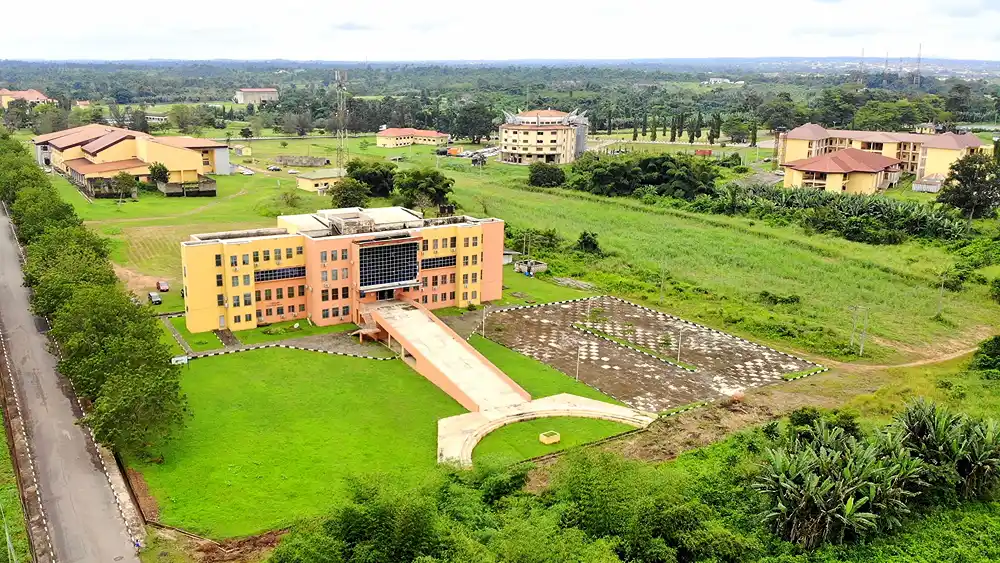
University Branch Libraries, Location and Years of Establishment
Mission, Functions and Services
The mission of the University Library is to harness, maximize and direct its activities effectively and efficiently so that the University community and researchers will have quick access to relevant, accurate, reliable and timely information to facilitate academic research and extension work for its clientele made up of mainly staff and students (of varying levels in both undergraduate and postgraduate) as well as other accredited users from within and outside the University – Community.
Divisions of the Library
The University Library is a system made up of subsystems, some of which are further compartmentalised into units, outlined and discussed below.
- Collection Development Division
- Technical Services Division
- Readers Services Division
- Series Services Division
1. Collection Development Division
Essentially, collection development is an evolving concept of library collection management devised to answer changing readers’ demands. The division is saddled mainly with the responsibility of acquiring books and other information sources for the library.
This division is made up of two units, namely:
- Acquisition Unit and
- Gifts and Exchanges Unit.
The major functions of this division are:
- To assess users’ needs in terms of resources to be acquired
- Assess the University Curriculum and develop resources accordingly
- Evaluate the library’s current collection
- Work out the selection and acquisitions policy
- Coordinate selection tools and plan for resource sharing.
The division utilises the following financial sources to develop the University Library stock. Vis-à-vis
- TETFUND Allocation to Libraries
- Donations from individuals, organisations and corporate bodies,
- University Funds Allocation to the Library from students’ fees,
- Annual Library Budget Allocation from:
- CCED
- PG School
- Open and Distance Learning Centre
- Book Aids International Coupons and
- Government subvention.
Of all the sources mentioned above, only TETFUND and other internally generated funds have been used regularly in the acquisitions of books and journals for the University Library on a yearly basis. Donations from individuals have also proved to be reliable.
2. Technical Services Division
The Technical Services Division (TSD) could rightly be described as the “engine room” of Library services. It is the division that is responsible for processing all the materials acquired by the University to meet the needs of students, staff and other members of the University community.
These information materials, after being listed and accessioned, are brought to the Technical Services Division for Cataloguing and Classification, which aids their retrieval on the shelves by the library users. The Technical Services Division is made up of the following units:
1. Cataloguing and Classification Unit
Listed and accessioned books are received at this section. The materials are checked to ascertain if some of them or earlier editions of such titles are already available in the library’s collection. This is to prevent duplication of efforts in processing and to ensure an update of files and records. Duplicate and freshly acquired materials are separated here. While duplicate copies are updated, the newly acquired materials are catalogued, giving their bibliographic information which are usually represented on the catalogue cards, worksheets and then are assigned class marks. The essence of this is to facilitate easy access and retrieval of information materials by the users.
2. Materials/Book Processed
With the adoption/introduction of the Library of Congress Online Cataloguing, our output/book process at the Technical Services Division has improved tremendously. The automation software in use presently is KOHA Library Management Software.
3. Building and Security Unit
The main duty of this Unit is to ensure maximum protection of the University Library building and its resources. The building is often a huge investment that needs constant maintenance and protection against theft, damage or other means of destruction. Taking into consideration the substantial sum of money spent on any library in terms of building, furniture, electronic and communication equipment, as well as library materials, there is a need to provide adequate security whether the library is in operation or not.
3. Readers’ Services Division
The Division, being the service division, serves as the Public Relations Unit of the University Library. It maintains daily contact with the users. The performance of the division serves as the readers’ parameter in judging the efficiency or otherwise of the Library.
Opening Hours
The University Library is open to Users between 8.00 a.m. to 6.00 p.m. from Monday through Friday.
The non-residential nature of the University and its distance from town have debarred the Library Management from extending the closing hours to 10:00 p.m. as operated in some other institutions.
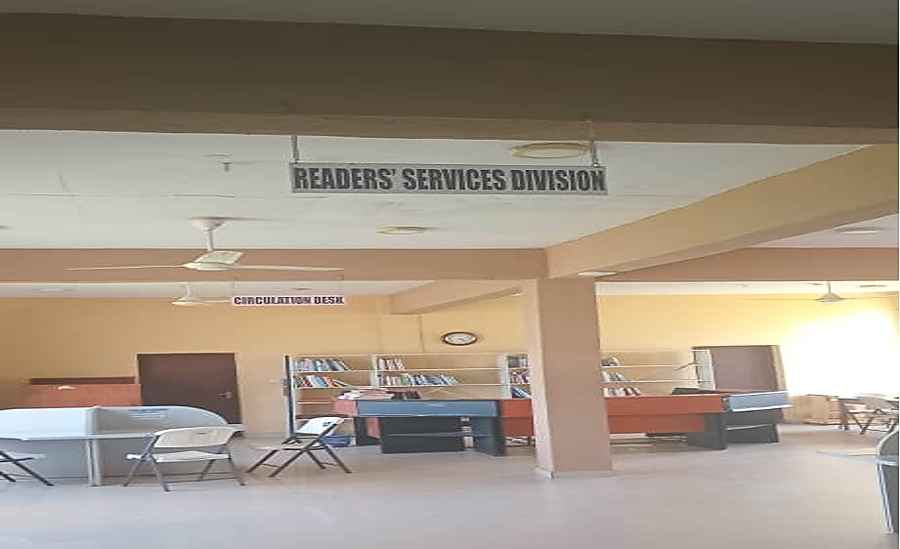
Division units
The division consists of the following units:
- Circulation Unit,
- Reference and Bibliographic Unit; and
- Bindery and Reprographic Unit
- Learning Common Spaces
1. Circulation Unit
The Unit carries out the following activities:
- Registration of new users, as well as the renewal of existing users,
- Loan Services
- Orientation /Users’ Education programmes
- Referral services, i.e. introduction of users to other Libraries or relevant organisations
- Reference Services,
- Book/Library materials maintenance,
- Shelves maintenance; and
- Collation of various statistics/records
- Research Help Desk
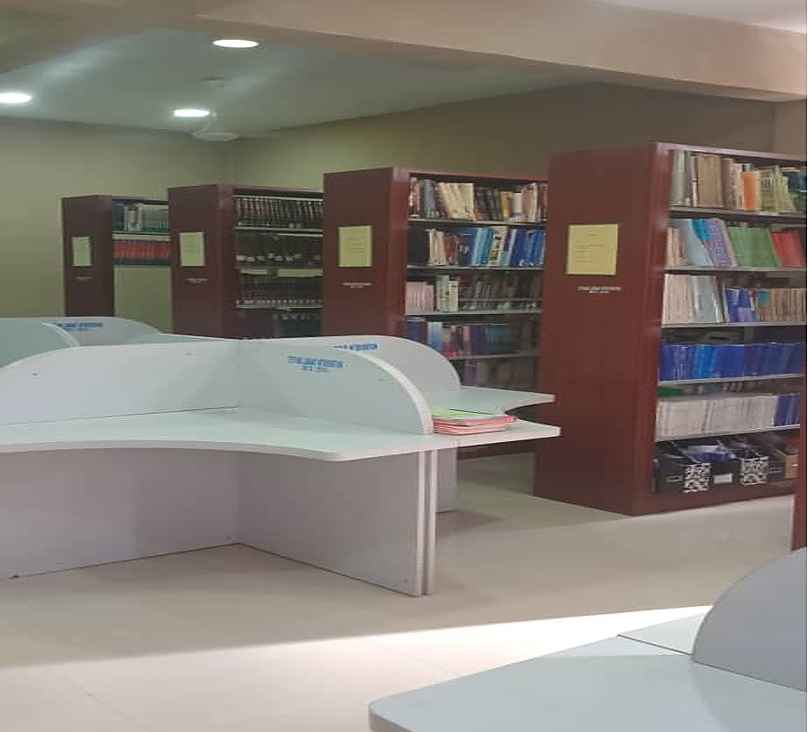
The University Library patronage has continued to increase significantly over the years. However, the number of users varies according to the existing population of students. The table below summarises the readers’ services in the library over the past ten years.
University Library Collection Development Volumes, 2017 to date
University Library Serials Collection
2. Reference and Bibliographic Unit
The Unit handles all the publications from the University Library and also handles users’ enquiries through literature search, interviews and referral services when necessary. The Unit houses valuable quick consult books that are strictly not on loan, as well as some other reference resources.
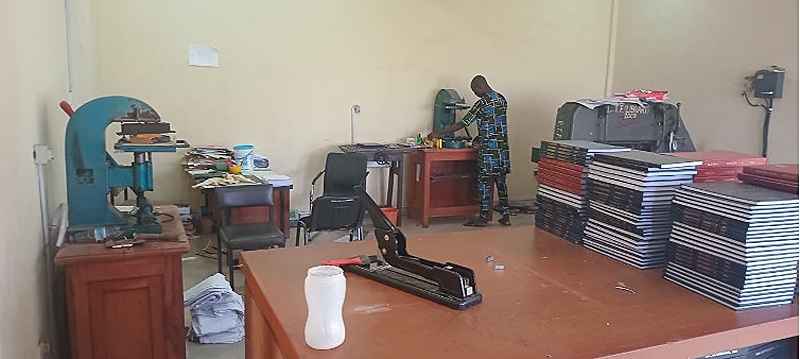
3. Bindery and Reprographic Services Unit
In 2003, the University Library established the Bindery and Reprographic Unit. The Bindery was created to maintain the library’s worn-out books/materials, which had hitherto been consuming quite a chunk of the library’s lean resources. The library, reacting to popular demand, has extended skeletal bindery services to the entire University community periodically. The Bindery section now handles the bindery of all Postgraduate students’ theses and dissertations and the final year law students’ projects.
4. Learning Common Space
This space was set up in the year 2025 to provide opportunities for research discussion, interactions and presentations among small groups of students/researchers, particularly the postgraduate students.
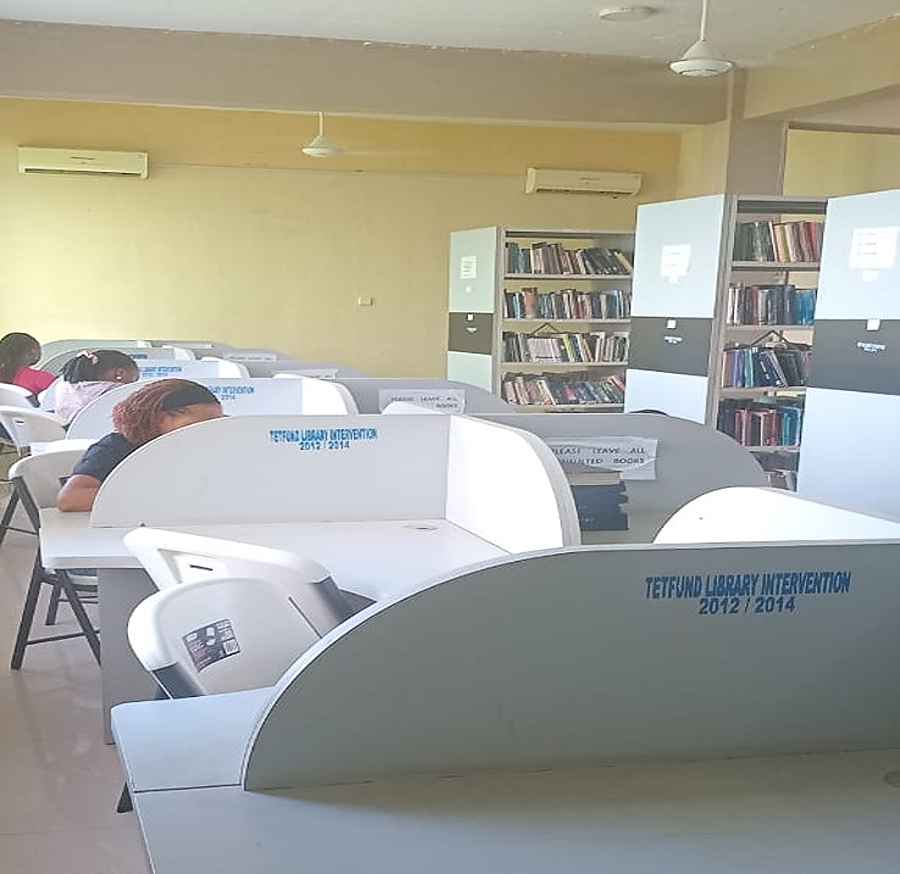
Seating Capacity: The whole Library Complex has a seating capacity of 3,055. Despite the establishment of branch libraries in the Main Campus, Sagamu campus, Ayetoro campus and Ibogun Campus, the Library is still experiencing high user patronage and attendance. The table that follows shows the daily average attendance across all branches.
University Library Average Daily Users/Attendance 2017- to date
Reading Room
4. Serials’ Services Division
This Division of the Library houses the Serials’ collections and provides services to users who need information contained in such publications.
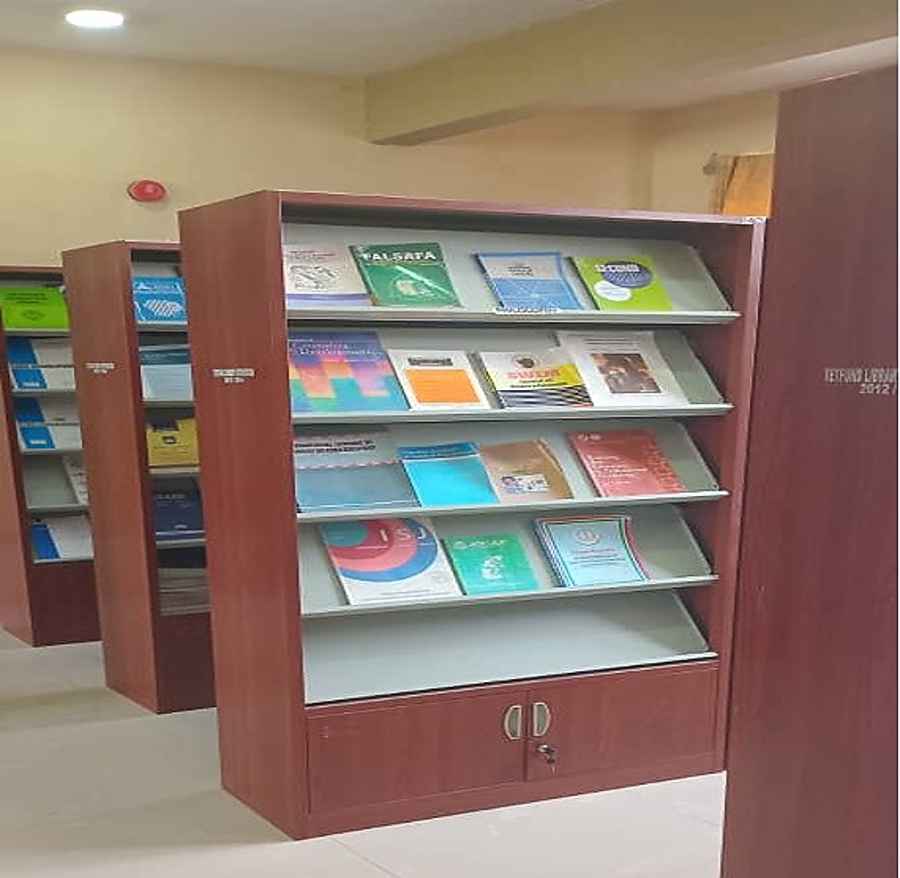
Serials are publications in any medium that are issued in successive parts at regular or irregular intervals and intended to be issued indefinitely. Examples of Serial publications are journals, magazines, newspapers, and other publications that have no date of termination. Serial publications are essential sources of information for researchers. They contain up-to-date information, and they help to meet the researcher’s need for information as well as a publication outlet. The adequacy of the serial collection of a Library directly helps in meeting the objective of the University.
The library subscribes to a wide range of academic journals in all disciplines. Foreign journals are not subscribed due to dearth of funds, especially foreign exchange. However, to alleviate the problem of absence of foreign journals, the library has relied on the Tertiary Education Trust Fund (TETFUND) Library Intervention Fund.
Some electronic databases available in the library include EBSCOHOST, JSTOR, AGORA, Taylor and Francis, Emerald Insight, HINARI, OARE, etc. These databases house thousands of journals in several disciplines. The List of such available databases in the library has been sent to all provosts, deans/HODs/ other relevant officers in the University. These databases are equally available in the University’s main Library and the branches. The passwords to the various databases are available on the library portal.
Services of the Division
The division carries out the following services for staff and students of the University:
- Selection, ordering and processing of serials;
- Compilation of serial publication list;
- Cataloguing and Classification of Journals
- Reference Services;
- Readers’ services; and
- Display of current serials and shelving of the consulted ones.
- Inventory of Newspaper’s Content
Multimedia Resources Centre
The Multimedia Resources Centre is located within the Main Library Building; the unit began operations in 2001. The name was changed to the Multimedia Resources Centre in March 2004 to better reflect its expanded functions.
This centre serves as the central hub for Information and Communication Technology (ICT) services within the library. Its primary functions include:
1. ICT Support and Maintenance
- Provides hardware and software support through troubleshooting and maintenance.
- Ensures the smooth operation of computer systems for both staff and library users.
- Supports data backup and security management.
2. E-Library Management
- Manages the e-Library unit, providing internet connectivity and access to subscribed research databases.
- Facilitates staff and student training in research skills and ICT proficiency.
- Supports digital resource management, including the capturing, processing, and storage of images and videos.
3. Automation of Library Services
- Implements and maintains library automation software, which is currently KOHA Integrated Library Management System.
4. Academic and Research Support
- Facilitates the presentation of lectures, seminars, and conference papers.
- Provides a conducive environment for research and academic collaborations.
5. Manages Library Portal, Enhancing Access to Information and Resources
- The Library Portal serves as the digital gateway to the library’s vast collection of resources and services. It is designed to provide library patrons, students, faculty, researchers, and staff with seamless access to a wide range of digital and physical library resources from any location.
About the E-Library
In 2012, the Centre established an e-Library unit with the donation of 50 Zinox computers by the Universal Service Provider Fund (USPF). However, as the systems became obsolete, the library made efforts to upgrade the infrastructure. In 2022 and 2024, 40 new HP computers and 40 Lenovo all-in-one desktop units were acquired, respectively, to improve the Centre’s capacity and enhance patronage. The facility now serves as a vital resource for staff and student training in research skills and ICT proficiency.
Despite these advancements, internet connectivity remains a significant challenge, negatively impacting regular library services. Nevertheless, the centre continues to play a crucial role in facilitating lectures, seminars, and conference presentations by both staff and students, both within and beyond the university. This ongoing engagement significantly enhances the university’s reputation. Additionally, the centre offers facilities for capturing, processing, and storing digital images and videos.
Automation of Information Services
To streamline library services, the centre has installed KOHA ILMS automation software. Currently, the Cataloguing module is operational, allowing the library to catalogue all acquired books and store them in the database. These catalogued records are accessible to the public during library visits, promoting resource discovery and usability.
Hardware and Software Support
The centre provides hardware and software support through troubleshooting and maintenance. In addition to a systems analyst, the unit has personnel dedicated to offering technical assistance to library staff and users. The unit is responsible for computer maintenance, ensuring that systems remain functional.
Data Security and Backup
To secure the databases, the Multimedia Resource Unit is expected to host both internal and cloud backup systems to ensure the security and integrity of its resources and information within its holdings.
In spite of the dwindling funds and staff, the University is always renovating its environment and services to provide a conducive atmosphere for students and faculty staff to enhance their studies and learning.

