

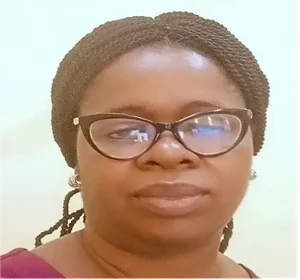
 Prof. Olusolape Afolake Favour ILUSANYA
Ilusanya.olusolape@oouagoiwoye.edu.ng
Orcid ID: 0000-0001-6103-4501
Google scholar citation: 575; h index: 8; i10-index: 8
+23476048048
Professor Olusolape Afolake F. Ilusanya is a professor of microbiology, researcher, and administrator who currently serves as the Head of the Department of Microbiology at Olabisi Onabanjo University, Ago-Iwoye, Ogun State, Nigeria. With over two decades of experience in academia, she has effectively combined teaching, research, and leadership to advance microbiological sciences in Nigeria.
She holds a PhD in Microbiology from Olabisi Onabanjo University (2015). Her specialisation is environmental microbiology, with research interests in soil microbiology, microbial ecology, and bioremediation. She has made notable contributions to the effects of xenobiotics on soil microorganisms and sustainable environmental practices through the use of eco-friendly microbial alternatives.
A passionate educator, Professor Ilusanya has taught and mentored hundreds of undergraduate and postgraduate students, many of whom now thrive in academia, research, and industry. She is recognised for her student-centred teaching style, emphasis on critical thinking, and ability to link theory with practical applications. She has published widely in reputable journals, presented at conferences, and is actively engaged in professional bodies in microbiology and related sciences.
As Head of Department, her vision is to build a centre of excellence in microbiological research and teaching, advancing sustainable practices through microbial innovation while fostering global collaboration in scientific research.
Recent Publication
- Egberongbe, H. O., Adekola, H. A., Ajetunmobi, A. S., Adewale, A. O., Ilusanya, O. A. F., Popoola, O. D., & Akinbola, O. J. (2023). Bacteriological analysis of effluent and the surrounding soil from a selected brewery in Ogun State, Southwest Nigeria. FUW Trends in Science and Technology Journal, 8(2), 191–195.
- Ilusanya, O. A. F., Olukole, K. M., Olayiwola, F. O., Osobamiro, T. M., Aluko, A. A., Oke, A. O., Adeyemi, E. O., & Nwagala, P. N. (2023). Microbiological analysis of a municipal dumpsite and its environ in Lagos State, Nigeria. Journal of Experimental Research, 11(3), 170–181.
- Ilusanya, O. A. F., Egberongbe, H. O., Ogunmokun, O. O., Bashiru, A. A., Akinbola, O. J., & Oyeyipo, F. M. (2023). Screening of bacteria from the rhizosphere of maize for their antagonism against fungal and bacterial phytopathogens. FUW Trends in Science and Technology Journal, 8(3), 238–242.
- Nwagala, P. N., Bankole, S. A., & Ilusanya, O. A. F. (2024). Isolation and molecular characterization of cellulose-producing bacteria from waste dumpsite. Scientia Africana, 23(1), 73–84.
- Osobamiro, T. M., Ilusanya, O. A. F., Agbarakwe, S. P., & Olajumoke, O. I. (2024). Immobilization of copper, cadmium, and lead using NaOH- and H₂SO₄-modified biochar and Pseudomonas aeruginosa. Journal of Materials and Environmental Science, 15(4), 595–608.
- Olajumoke, O. I., Ilusanya, O. A. F., Adesetan, T. O., Osobamiro, T. M., Agbarakwe, S. P., Nurudeen, W., & Senjobi, C. T. (2024). Impact of co-application of biochar and Pseudomonas aeruginosa on microbial parameters in heavy metal-contaminated soil. Scientia Africana, 23(2), 13–24.
- Ilusanya, O. A. F., Olajumoke, O. I., Fogbonja, O. C., Egberongbe, H. O., Oyeyipo, F. M., & Yakubu. (2024). Molecular characterization of heavy metal tolerant bacteria from agricultural soil in Ago-Iwoye, Ogun State, Nigeria. Al Hayat: Journal of Biology and Applied Biology, 7(1), 45–57.
- Ilusanya, O. A. F., Osobamiro, T. M., Adesetan, T. O., Olajumoke, O. I., Agbarakwe, S. P., Senjobi, C. T., & Egberongbe, H. O. (2024). Effect of co-application of biochar and Pseudomonas aeruginosa on Corchorus olitorius yield. Nigerian Annals of Pure and Applied Sciences, 7(2), 19–27.
- Sossou, I. T., Agu, G. C., Ilusanya, O. A. F., Olalekan, T. T., & Afolabi, O. T. (2024). Antibacterial activities of biofilm-positive urobacteria isolated from patients attending a urology department of a teaching hospital in Ogun State. FUW Trends in Science and Technology Journal, 9(3), 318–324.
- Onabanjo, M. A., Agu, G. C., Ilusanya, O. A. F., Adewoga, T. O. S., Popoola, O. D., Adekola, H. A., Sossou, I. T., & Afolabi, O. T. (2024, September 3–4). Perception of immunocompromised patients to antibiotic resistance, isolation and phenotypic characterisation of multidrug-resistant pathogens for extended-spectrum beta-lactamase production. In Proceedings of the OWSD Southwest Conference (pp. 200–213). University of Ibadan.
Academic Staff
1. Prof. Samuel Adegoke Bankole – Professor of Environmental Microbiology and Mycotoxicology bankole.samuel@oouagoiwoye.edu.ng Orcid ID:0000-0001-9285-8300 Google Scholar Citations: 798; h-index: 14; i10-index: 22 (+2349161497586) Office Rm. 004
2. Prof. Moses Olusola Efuntoye – Professor of Medical Microbiology and Public Health efuntoye.olusola@oouagoiwoye.edu.ng Orcid ID: 0000-0002-3863-5672 Google Scholar Citations: 730; h-index: 16; i10-index: 20 (+2348058531194) Office Rm. 009
3. Prof. Ismail Babatunde Onajobi – Professor of Applied Microbiology and Environmental Biotechnology, Orchid ID: 0000-0001-8738-1528 Google Scholar Citations:789; h-index: 14; i10-index: 22: (+2347065913072) Office Rm. 005
4. Dr. Haneefat Olabimpe Egberongbe – Reader (Environmental Microbiology and Public Health) bimpe.egberongbe@oouagoiwoye.edu.ng Orcid ID:0000-0001-8738-1528 Google Scholar Citations: 269; h-index: 8; i10-index:7 (+2348054576094) Office Rm. 003
5. Dr. Georgia Chinemenma Agu – Reader (Medical Microbiology) agu.georgia@oouagoiwoye.edu.ng Orcid ID: 0000-0001-5169-5584 Google Scholar Citations: 766; h-index: 14; i10-index: 16 (+2348340044101) Office Rm. 007
6. Dr. Titilayo Oyeronke Adesetan- Reader (Food and Industrial Microbiology ) titilayo.adesetan@oouagoiwoye.edu.ng Orcid ID:0000-0002 2775-6313 Google Scholar Citations: 295; h-index: 8; i10-index: 8 (+2348055469763) Office Rm. 010
7. Dr.Omowunmi Abosede Banjo- Senior Lecturer (Environmental Microbiology) banjo.omowunmi@oouagoiwoye.edu.ng Orcid ID:0000-0003-1880-6814 Google Scholar Citations: 499; h-index: 5; i10-index: 4 (+2347061942923) Office Rm. 006
8. Dr. Benjamin Thoa Thomas – Senior Lecturer (Molecular Microbial Genetics and Medical Microbiology) Orcid ID:0000-0003- 0675-5749 Google Scholar Citations: 393; h-index: 10; i10-index: 10 (+2348160096694) Office Rm. 002
9. Dr. Omolara Dorcas Popoola – Lecturer 1 (Medical Microbiology and Bacteriology) Orcid ID:0000-0001-6816-5627) Google Scholar Citations: 103; h-index: 6; i10-index: 3 (+2348075773022) Office Rm. 008
10. Dr. Hikmat Titilayo Balogun -Abiola- Lecturer II (Environmental Microbiology) hikmat.balogun-abiola@oouagoiwoye.edu.ng (+2348131991190).Rm 011
11. Miss. Ameenat Opeyemi Oloko Graduate Assistant (Molecular Biology) oloko.ameenat@oouagoiwoye.edu.ng (+2348102103186). Rm 12
Secretariat Staff
12. Mrs. Mopelola Olusola Sobowale- Senior Secretariat Assistant sobowale.mopelola@oouagoiwoye.edu.ng (+2348053050549) Rm 001
13. Mrs. Taiwo Modupe Odukogbe – Executive Officer (+2348056066644) Rm 001
Technical Staff
- Mr. Adeleke Adesanya Adesemowo – Chief Technologist +23470298092
- Mr. Joseph Oladayo Olaoye – Laboratory Supervisor olaoye.joseph@oouagoiwoye.edu.ng +23460860442
- Mr. Olusola Michael Bakare – Assistant Laboratory Supervisor. +2348061193785
- Mr. Sunday Ayoola Odunsanya – Assistant Laboratory Supervisor +234809452042
- Mrs. Iyabode Olufunmilayo Adebanjo – Senior Laboratory Assistant +234805330170