

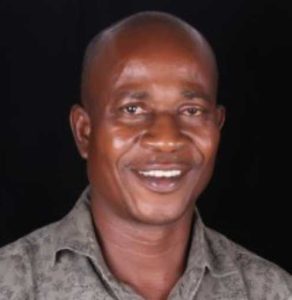
 Professor Segun Omosule
omosule.segun@oouagoiwoye.edu.ng
Orcid ID: https://0000-0003-2430-2137
Google scholar citation: 58; h index: 3; i10-index: 1
+2348024010905
Segun Omosule PhD is a Professor and Head of Department of English, Olabisi Onabanjo University, Nigeria. He is a prolific writer who has contributed scholarly papers to leading journals in Africa, Asia, America, Europe and Australia. His area of specialization is oral literature. His versatility cuts across the genres of literature and is a leading voice in postcolonial literature, translation and semiotics. He began his career as a journalist with the Nigerian Tribune and rose to the position of Senior Staff Writer/Reporter. He resigned from there and pursued a career in literature at the University of Ibadan where he bagged his Master’s and Doctorate in Oral Literature from the Department of English. He began his career as a Lecturer with the Department of English, Covenant University and later joined the Department of English, Olabisi Onabanjo University, Nigeria.
His area of specialisation is Oral Literature and Aesthetics. He has published more than fifty journal articles in scholarly journals across the globe. Some of his scholarly papers have been published in Vishvanatha Kaviraja Institute, Uluslararasi Kibris Universitesi Fen-Edebiyat Fakultesi, Cyprus International University (CIU), Western Folklore, Singularities, Misriqiya, International Journal of Multi-disciplinary Research, California Linguistic Notes, Ibadan Journal of English Studies, Revue Internationele De Recherche En Communication, Education Et Development (RIRCED), Tattva, Intellect, JELCS, KIU Journal of Humanities, KIU Journal of Social Sciences, Contemporary Humanities, Journal of Studies in Humanities, UNAD Studies in English and Literature, AMA: Journal of Theatre and Cultural Studies, MAJAC: Makurdi Journal of Arts and Culture, Opanbata, LASU Journal of Humanities, Agogo Journal of Humanities, The Quint, Hawai’i Journal of the Humanities, Yoruba Study Review, Hawai’i Journal of the Humanities, Journal of African Films and Diaspora Studies (JAFDIS) among other local journals.
Prof. Segun Omosule is passionate about oral performances in indigenous societies. His mission is to argue that indigenous societies had different means of enhancing cohesion prior to the emergence of an all-encompassing government. He argues that indigenous folks had chosen the medium of arts to document their challenges, record landmarks, and periodically re-enact such values at the arenas in order to enliven the memories of the younger generations, thereby regeneration unforgettable developments for the benefit of all.
In his capacity as Head of Department, he oversees academic administration, curriculum development, staff coordination, and student mentoring. He is committed to fostering a culture of academic excellence, collaborative research, and innovation within the Department. His leadership is directed toward strengthening the Department’s visibility and expanding its contributions to teaching and graduating students who possess the requisite discipline, skills and abilities that are critical to English studies and useful in business, teaching and publishing not only in the academic field but in the world of business.
Recent Publications
- Omosule, S. (2023). “Comparative Study of Conflict and Diplomacy in Ifa’s Ogbe-Suuru: The Yoruba Indigenous Metaphysics”, Journal of Comparative Literature and Aesthetics: 46 (2), 49-59, Vishvanatha Kaviraja Institute. India.
- Omosule, S. (2023). “The Nexus between Performance, Aesthetics and Philosophical
Motifs in Indigenous Festivals”, 29 (114), 501-516, Uluslararasi Kibris Universitesi Fen-Edebiyat Fakultesi, Cyprus International University (CIU). Ankara, Cyprus. Doi Number: http://dx.doi.org/10.22559/folklor.2473 - Omosule, S. (2023). “From Verbal to Digital: Cyberspace as Folk-Arena in the Study of
Folklore”, The Quint, 15.4, University of the North, Canada. - Omosule, S. (2023). “Propp’s Narrative Technique and Relevance to Indigenous
Folktales”, Hawai’i Journal of the Humanities, 4: (1), 23-32, University of Hawai’i. Hilo, Asia. - Omosule, S. (2023). “Interrogating Okooro Masquerade: A Structuralists Reading of the
Costumes”, 8 (2).Yoruba Study Review. University of Florida. - Omosule, S., Adesiyan U. Rebecca, & Oremire J. Ehibor. (2024). “Street Culture in Omo Ghetto,
King of Boys, and Nimbe: Selected Nollywood Films.” Journal of African Films and Diaspora Studies (JAFDIS) 7 (4). - Omosule, S. (2024). “Orality and Intertextualityin Indigenous Arts and Western Texts.”
Hawai’i Journal of Humanities. 5 (1). University of Hawai’i. Asia. - Omosule, S., Atolagbe Alice. (2024). “Complementary Gender Roles in Elewe Masquerade
Dramaturgy.” 10 (3). Issues and Research in Education, Humanities, Science and Technology (IREHST). Obafemi Awolowo University, Ile Ife. - Omosule, S. & Ajimisan Stephen. (2024). “Identity, Displacement and Obscuring the Native
Personality: Towards Decolonising Indigenous Folks in Ilaje Names.” 9 (1 & 2). Yoruba Studies Review. University of Florida. - Omosule, S. & Olu-Dukiya, Damilola (2024). “Defying the Norms: Exploring Homosexual
Variants in Selected Nigerian Short Stories.” JOSIHCO. 14 (1) Tai Solarin University of Education, Ijebu Ode. - Omosule, S.; Kemi Olayemi; and Adewale Ezekiel Adejumo (2025). “Exploring Interplay
between Sankofa and Digital Literary Narratives in Adichie’s Americana.” Africa: Journal of Contemporary Issues (AJACI): A Publication of the Faculty of Arts and Social Sciences, Ladoke Akintola University of Technology, Ogbomoso, Nigeria. 24 No 2 2025. - Omosule, S.; Kemi Olayemi; and Olumayowa Sanni (2025). “Entertainment and Moral
Sustenance in Kalarunmo Masquerade Performance in Ijebu Igbo, Ogun State, Nigeria.” Africa: Journal of Contemporary Issues (AJACI): A Publication of the Faculty of Arts and Social Sciences, Ladoke Akintola University of Technology, Ogbomoso, Nigeria. 24 No 2 2025.
Academic Staff
Prof. Samson Dare – Professor of English Language: Stylistics dare.samson@oouagoiwoye.ed.ng
(+3248033308414)
Dr. Oluwakemi Titilola Olayemi – Dr. of Sociolinguistics, Discourse Analysis, Grammar & Phonology, with Focus English Usage: kemi.olayemi@oouagoiwoye.ed.ng
(+2348053515891) Office Room: 007
Dr. Hakeem. Fola Kazeem – Dr. of Oral Literature, Literary Theory, Criticism and Poetics: afola.kazeem@oouagoiwoye.edu.ng Google Scholar Citations: 1; h-index: 1, i10-index: 0;
(+3249075130303) Office Room: 011
Mr. Olawale Taju Ajayi – Dramatic Literature, Gender Studies and Diasporean Literature: ajayi.olawale@oouagoiwoye.edu.ng Orcid ID: 0009-0003-7117-3494; Google Scholar Citations: h-index: 3, i10-index: 2
(+2348033857528) Office Room 013.
Dr. Grace Itoro Ibanga – Dr. of Gender Studies and Africa Literature: grace.ibanga@oouagoiwoye.edu.ng Orcid ID: 0000-0002-6012-5513; Google Scholar Citations: 8; h-index: 2, i10-index: 0; (+2348101517492) Office Room: 012
Dr. Emmanuel Jolaolu Adegbenro – Dr. of English Language: Stylistics – adegbnro.emmanuel@oouagoiwoye.ed.ng Orcid ID: 0000-0002-4299-9401; Google Scholar Citations: 2; h-index: 2, i10-index: 0 (+2348067383440). Office Room: 008
Dr. Abosede Grce Mayadenu – Dr. of Critical Discourse Analysis – abosede.mayadenu@oouagoiwoye.edu.ng Orcid ID: 0009-0000-7994-970X; Google Scholar Citations: ; h-index: , i10-index: (+2348036770456) Office Room: 005
Dr. Oluwakemi Abiola Kalejaiye – Dr. of African and Comparative Literature, Memory and Trauma Studies – abiola.kalejaiye@oouagoiwoye.edu.ng Orcid ID: 0000-0002-6278-1426; Google Scholar Citations: 2; h-index: 1; i10-index: 0 (+2347033011316) Office Room: 014
Non Academic Staff
Mrs. Kuburat Oluwakemi Abdul – Senior Secretarial Assistant I; abdul.kuburat@oouagoiwoye.edu.ng (+2349036620287), Office Eoom 002.
Mrs. Abiola Olawumi Okuyelu – Higher Executive Officer; abiolaoluyelu19@gmail.com (+2348028834331 – Office Room. 002