
Department of Banking and Finance

The general philosophy of the programme is to produce skilful manpower with theoretical and practical knowledge as well as upright in character for the various aspects of the Banking & Finance industry in particular and the whole economy in general.

The Banking and Finance programme provides quality education and professional training leading to the award of a B.Sc. (Banking and Finance) degree, which may be awarded with honours or as a pass degree. The ethics of banking, which revolves mainly around transparency and honesty, is expected to be imbued in the students of the Department.

Towards this end, the curriculum is broadly interdisciplinary. First, the students are exposed to a foundation course in English, Economics, Mathematics, Computer and Philosophy/Logic as background for problem solving. Second, the Department offers compulsory ‘core’ courses in Finance and Banking, Business and Management, Accounting, Marketing, Finance, Production, Personnel and Human Resources Management, Quantitative Techniques, Entrepreneurship and Business Policy, for career entry into Banking and Finance Management positions in financial institutions and other private and public business/industrial enterprises

Vision

To empower students and staff to become informed financial experts and renowned banking professionals equipped with the necessary technical skills, critical thinking abilities, and ethical values to succeed in a dynamic and globally connected financial environment.

Mission

  1. To provide excellence in financing education through teaching, research, and community service. To offer banking and finance education to students who desire to work in the banking sector or the finance department of corporate organisations, and to obtain professional certifications or conduct applied research benefiting banking and finance.
  2. The programme, in addition, has the following as part of its philosophical missions:
  3. To promote knowledge creation and dissemination through advancing financial theories, banking principles and practice via teaching, research and academic inquiry;
  4. To sustain ethical and responsible financial leadership by instilling values of integrity, transparency, and social responsibility in future financial professionals.
  5. To bridge theory and practice by connecting academic knowledge with real-world financial applications to equip our students for careers in the management of banking, investment and finance. 

Our History

The Banking and Finance degree was introduced as a programme under the Department of Economics during the 1989/1990 academic session. The Department of Economics housed the programme for two academic sessions before it became autonomous. Since its inception, the programme has received acceptability and support from the banking sub-sector of the financial system in the form of lecturers and financial support. The Banking and Finance programme became a full-fledged department in the 1991/1992 academic year.
The Department of Banking and Finance at Olabisi Onabanjo University (OOU) provides students with a strong academic foundation in financial management and investment. As a key department within the Faculty of Administration and Management Sciences (FAMS), it offers a four-year Bachelor of Science (B.Sc.) degree programme in Banking and Finance. The curriculum is meticulously crafted to equip students with the high-level skills necessary for analysing complex financial issues at both micro and macro levels within Nigeria’s evolving economic landscape.

Academic Programme

The academic programme is complemented by diverse academic tracks, including undergraduate and postgraduate programmes, to cater to a broader range of students. In addition to its robust academic offerings, the department emphasises the practical application of Banking and Finance theories to ensure graduates are prepared for successful professional careers by focusing on producing highly skilled and career-ready graduates.

The Department actively contributes to national development by supplying qualified professionals to both the private and public sectors of the Nigerian economy.
The academic environment is further strengthened by dedicated researchers, who conduct valuable research on banking, finance and related fields, with publication in different reputable outlets both locally and internationally. This is a blend of theoretical knowledge, practical skills, and relevant research positions in the Department as a developer of globally competitive financial experts in the industry and academia.

Research Areas

Community research in banking and finance is dedicated to understanding the relationship between financial institutions and the communities they serve. This field explores how localised financial services, such as those provided by financial institutions, influence economic development, mitigate financial exclusion, and enhance the overall well-being of residents in both rural and urban centres.

The department focuses on three (3) cardinal research areas, which are;

  1. Banking System, Risk and Regulation
  2. Development Finance and Financial Technology
  3. Corporate Finance and Investment Banking.

Facilities for Student Training

In an academic setting, a banking and finance department provides specific facilities and resources to train students, support research, and engage with the broader financial community. The Department is equipped with modern research and teaching tools.

  1. Lecture Halls and Classrooms: This includes the CIBN legacy building, which is conducive to research and effective teaching.
  2. Departmental library and resource centre: A specialised collection of books, journals, and databases focused on banking, finance, financial economics, and investment theory, supporting students’ research.
  3. Finance Laboratory: A finance laboratory is equipped with specialised hardware, software, and databases to enable students and researchers to perform financial analysis, interpret data, and apply financial theories in a practical setting. These resources are essential for training future financial professionals, replicating real-world market scenarios, and supporting academic research.
  4. Workstations: This is an addition to high-performance computers with dual or multiple monitors are standard, allowing users to view data, charts, and models simultaneously.

Departmental Organogram

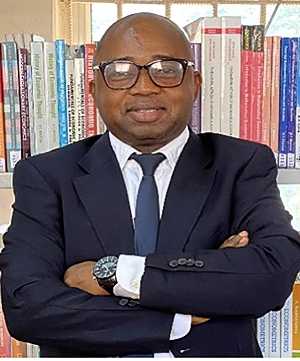
Dr James Ayanwale OBADEYI

Orcid ID: https://orcid.org/0009-0009-7525-9061.
Google scholar citation: 144; h index: 7; i10-index: 6
+234 8055764957
obadeyi.james@oouagoiwoye.edu.ng

Dr James A. OBADEYI is a Lecturer I, who specialises in Microfinance and Financial Management in the Department of Banking and Finance, Faculty of Administration and Management Sciences. James earned his Doctor of Philosophy Degree in Management (Financial Management) in 2019 from Ladoke Akintola University of Technology (LAUTECH), Ogbomoso, Oyo State, Nigeria; Master of Science – Business and Applied Economics (Finance Option) in 2009, from Olabisi Onabanjo University, Ago-Iwoye, Ogun State; and a Bachelor of Science Degree (Second Class Upper Honours) in Banking and Finance, from Olabisi Onabanjo University, Ago-Iwoye, Ogun State in 2004. He is also an alumnus of the Ogun State University (now Olabisi Onabanjo University), Ago-Iwoye, Ogun State (2001-2004). He attended Bolade Grammar School, Oshodi, Lagos, (1991-1994), where a Senior School Certificate Examination was obtained. Obadeyi became a member of the Chartered Institute of Bankers of Nigeria in 2007.

Obadeyi’s body of work primarily uses econometric and empirical methods to investigate Nigerian financial and economic issues. His publications have appeared in various academic journals and university repositories. James’ research interests are Microfinancing and Financial Management. He has at least 20 research publications in local and foreign peer-reviewed outlets.

Some of the research focuses of the scholar are in microfinance. James has extensively researched the microfinance sector in Nigeria, examining the challenges that microfinance banks face in delivering credit to small and microenterprises. He has also studied the impact of microcredit on the survival and growth of small-scale enterprises in Nigeria’s emerging markets. Secondly, monetary policy. The scholar evaluated the impact of monetary policy on economic growth in Nigeria, particularly in relation to interest rates, money supply, and inflation. His work highlights the challenges faced by the Central Bank of Nigeria (CBN) in controlling money supply and credit, and thirdly, remittances. The author’s research has investigated the effects of migrant remittances on the Nigerian economy. His findings indicate that while remittances can have a positive long-term impact on economic growth, their short-run effects can be insignificant or negative if not channelled toward productive investments, etc.

As Acting Head, he is responsible for both the administrative and academic functions of the Department, ensuring smooth and effective operations. This includes the crucial task of curriculum development in conjunction with the Departmental Curriculum Committee to maintain the relevance and quality of the educational programme of the Department, to coordinate departmental staff activities and manage academic administration to uphold a high standard of education. Similarly, the Ag. head takes a direct role in fostering the professional growth of students via mentorship (Mentor/Mentee relationship), thereby contributing to the academic and professional development of the students.

Academic Staff

  1. Prof Russell O.C SOMOYE – Professor of Entrepreneurship Finance Russell.somoye@oouagoiwoye.edu.ng Orcid ID: https://orcid.org/0000-0003-1922-4146; Google Scholar Citations: 744; h-index: 9; i10-index: 9 (+234 8113584850) Room: B23, 1st Floor, Olola Ogunlana Building, Main Campus
  2. Prof. Richard O. AKINGUNOLA – Professor of Banking and Finance, richakingunola@oouagoiwoye.edu.ng Orcid ID: https://orcid.org/0000-0002-6503-9147; Google Scholar Citations: 909; h-index: 12; i10-index: 16 (+234 8034717721) 1st Floor, FMAS I Complex, Main Campus
  3. Prof. Bamidele M. ILO – Professor of Banking and Finance, Ilo.bamidele@oouagoiwoye.edu.ng Orcid ID: https://orcid.org/0000-0001-6030-6018; Google Scholar Citations: 645; h-index: 12; i10-index: 12 (+234 8056008557). Business School Complex, Main Campus.
  4. Dr. Olumuyiwa G. YINUSA – Senior Lecturer (Development and Corporate Finance) yinusa.ganiyu@oouagoiwoye.edu.ng Orcid ID: https://orcid.org/0000-0003-1005-2341; Google Scholar Citations: 707; h-index: 14; i10-index: 17 (+234 8103888107) Room: 028, 1st Floor, Olola Ogunlana Building, Main Campus
  5. Dr. Taofeek A. AGBATOGUN – Senior Lecturer (Financial Management and Corporate Finance) agbatogun.taofeek@oouagoiwoye.edu.ng Orcid ID: https://orcid.org/0000-0002-7393-8134; Google Scholar Citations: 322; h-index: 7; i10-index: 7 (+234 8034424027) Room: 026, 1st Floor, Olola Ogunlana Building, Main Campus.
  6. Mr. Emmanuel O. ADEBAYO – Lecturer I (Development and Corporate Finance) olufemiadebayo@oouagoiwoye.edu.ng Orcid ID: https://orcid.org/0000-0002-3595-4926; Google Scholar Citations: 22; h-index: 2; i10-index: 1 (+234 8034445723) Ground Floor, FMAS I Complex, Main Campus.
  7. Mr Kehinde I. OLAIYA – Lecturer II (Corporate Finance, Actuarial Science)
    olaiya.kehinde@oouagoiwoye.edu.ng Orcid ID: https://orcid.org/0000-0003-4793-8525; Google Scholar Citations: 41; h-index: 4; i10-index: 0 (+234 8078522230) Room: B28, 1st Floor, Olola Ogunlana Building, Main Campus.
  8. Mr. Olusola E. OLOWOFELA – Lecturer I (Development and Corporate Finance, Micro-Finance) olowofela.olusola@oouagoiwoye.edu.ng Orcid ID: https://orcid.org/0000-0003-4793-8525; Google Scholar Citations: 218; h-index: 7; i10-index: 4 (+2348064385743) Room:025, 1st Floor, Olola Ogunlana Building, Main Campus.

Non-Academic Staff

Mrs. Omolabeke T. OGUNMOKUN – Chief Secretariat Assistant ogunmokunomolabake@oouagoiwoye.edu.ng +234 8059976347. Room. A25; 1st Floor, Olola Ogunlana Building, Main Campus.

Mrs. Abiodun A. OLATUNJI – Executive Officer olatunjiabiodun@oouagoiwoye.edu.ng +234 8052983871. Room: A25; 1st Floor, Olola Ogunlana Building, Main Campus.

Technological Staff

Mr. Abiodun A. SALISU – Senior Programmer salisu.abiodun@oouagoiwoye.edu.ng +234 7069355952